Measuring The Row Tote Bag alongside Other Minimalist Totes: A Breakdown
A category of its own is the territory pared-back styling in handbags has become, though few labels define it as firmly as The Row. Launched by Mary-Kate and Ashley Olsen, the label shaped its name on restraint: sharp silhouettes, substantial hides, and an approach to form that borders on architecture. When buyers type in the row tote bag or browse the fuller range under row bags, they’re usually trying to answer one question — is the elevated design cost justified by the price gulf between The Row and other quiet-luxury totes on the market? This comparison breaks down what distinguishes The Row’s approach from rivals active in the same restrained space, and where the payoff really becomes evident.
What Defines a The Row Tote
Across The Row brand’s tote forms, such as pieces from the Margaux family, a few unwavering principles apply: minimal external hardware, a lone central leather panel, and proportions built to remain practical across seasons instead of chasing trend cycles.
There is no branding imprinted across the front, no logo hardware, nothing to announce the price point other than the construction itself. Such is a deliberate choice that separates the row handbags from the majority of the tote market, where a prominent logo often does most of the persuading.
In this context, the choice of hides carries huge weight. The Row tends to use sturdier, well-structured skins that hold their shape with no need for internal supports or stiffening in a number of designs, and this is one reason the bags develop a lived-in patina instead of splitting or flaking. Stitching is typically minimal and precise, frequently leaving edges unfinished or treated so no visible topstitching appears. This reflects a broader hallmark of the row’s design ethos — paring back instead of piling on.
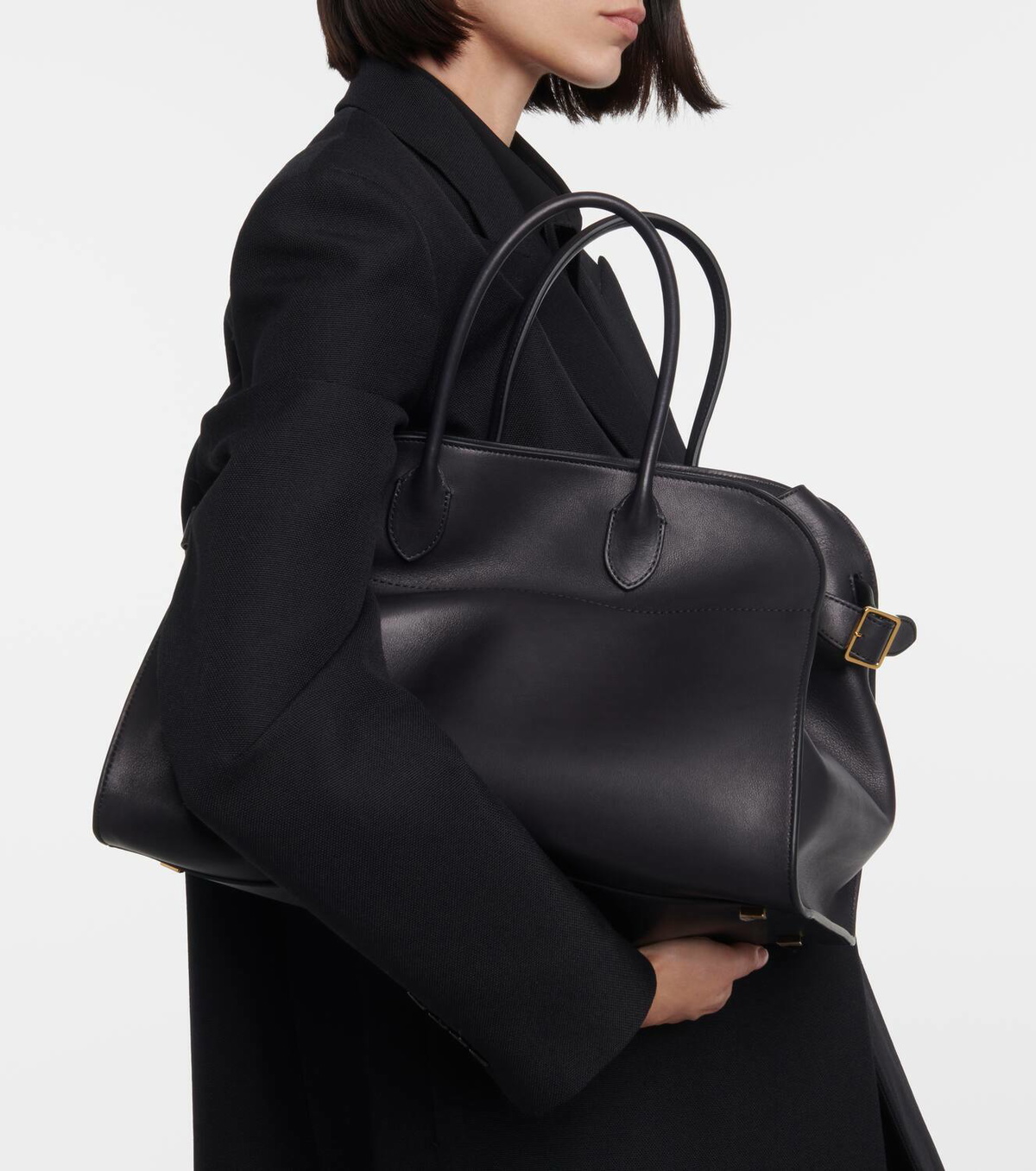
Across the row bags collection, the size range generally stretches from compact top-handle styles to roomy totes designed for daily workhorse duty. Drop length, base size, and interior sectioning differ from style to style, so buyers evaluating the yves saint laurent purse row bag lineup should check specific dimensions rather than assuming uniformity across the line.
Sizing Up Competing Minimalist Totes
Across the pared-back tote space, The Row isn’t the only one holding that ground. Labels such as Toteme, Khaite, and COS have similarly produced pared-down bag collections pulling from that shared design vocabulary — few seams, muted palettes, unbranded exteriors. The difference tends to surface in three places: leather thickness, hardware detailing, and build density.
More supple, flexible leathers are what Toteme’s totes often use for its leather totes, lending a relaxed silhouette that gives up structural integrity across years of use. Khaite’s approach aligns more with The Row in terms of structure and price positioning, with more substantial leathers and similarly minimal branding, establishing it as the closest direct competitor in the luxury-minimalist bracket. COS along with other mass-market labels provide the aesthetic at a steep discount, but typically use lighter, less substantial hides that don’t age the same way and often reveal wear patterns at the corners and base within one to two years of routine wear.
None of this means competitors are inferior products — it means that build priorities diverge. Someone seeking a gentle, sagging carry-all with a smaller price point may favor Toteme. A buyer focused on durability, resale potential, and enduring structure tends to lean toward The Row or Khaite.
Comparison Table: The Row vs. Competing Minimalist Totes
| Maker | Standard Leather Weight | Logo Prominence | Shape Durability | Price Tier |
|---|---|---|---|---|
| The Row | Heavy, dense | None to minimal | Excellent | Top-tier luxury |
| Khaite | Substantial | Subtle | High | Luxury |
| Toteme | Medium, soft | Minimal | Middling | Premium |
| COS | Thin to moderate | Barely any | Modest to moderate | Entry-level |
The Margaux Tote: The Row’s Most Searched Tote
Within the entire row lineup, the Margaux consistently ranks as the most searched and most requested style, which accounts for why “where to buy the row margaux bag” is such a popular query. It’s available in multiple sizes — the compact styles work well as everyday shoulder totes, while the oversized styles manage laptop-and-notebook daily commutes with room to spare. Its top-open build, understated hardware, and single-fold silhouette have made it something of a modern signature for the brand, holding a similar cultural position to what the Birkin or Kelly represent for Hermès, albeit at a different scale of recognition.
For anyone trying to track down the Margaux, the most reliable sources are The Row’s own website and flagship stores, along with authorized luxury retailers that stock the full row handbags range. Resale platforms specializing in authenticated luxury goods — those that check serial details and inspect hardware and stitching — are a backup choice worth considering, particularly for discontinued colorways or sizes that have sold out in stores. Buying through unauthorized third-party sellers or unclear marketplace listings carries genuine risk in this price category, so checking verification policies ahead of buying is not optional.
As the Margaux is often in higher demand than available inventory, waitlists at flagship boutiques are common, and popular neutral colorways sell out fastest. Those committed to tracking one down should be prepared to verify availability across various official stores rather than relying on a single location.
Tracking Where Worth Accumulates Through the Years
The full story on pared-down tote pricing only comes into view once per-wear cost and resale value are considered. The Row’s totes, particularly top row bags like the Margaux, have exhibited comparatively solid resale retention compared to numerous upscale contemporary labels, in part because production runs are smaller and in part because the visual language doesn’t go stale in the way that logo-driven bags can. This is a worthwhile point to weigh for buyers trying to decide whether to invest at full price or hold out for a row sale.
Speaking of which, a row sale is not a common occurrence — The Row deliberately limits markdowns and rarely discounts its signature styles, which is partly why resale value stays intact. When reductions do appear, they typically appear on previous-season colorways or limited seasonal collaborations rather than the mainstay tote range. Those hoping to find a Margaux or similar tote at a reduced price should monitor authorized retailer sample sales and end-of-season clearance events rather than banking on frequent blanket promotions.
In comparison, competitors like Toteme and COS run far more regular promotional cycles, which influences both accessibility and resale worth. A COS tote purchased on sale might deliver strong upfront value, but it fails to retain resale value in the way that a well-maintained row bag typically does. Here lies the trade-off shoppers need to weigh: lower upfront cost versus long-term value retention.
Making the Ideal Pick for Your Wardrobe
Deciding between The Row and other pared-down totes hinges on how the bag will be used and its expected lifespan. Anyone after a multi-year investment piece with little upkeep and strong resale potential will likely find the row bag category worth the premium. Someone wanting a rotating wardrobe of bags to keep up with seasonal trends, without the same attachment to longevity, may find better value in mid-range competitors.
Care requirements vary as well. The Row’s sturdier leathers typically withstand daily wear better and need less regular upkeep than the softer hides used by some competitors, though every leather tote gain from occasional conditioning and protection from prolonged sun exposure. Inner linings vary by style, so checking care instructions specific to the item bought stays essential no matter the brand.
For 2026 buyers navigating the crowded minimalist tote market, the sharpest differences come down to construction weight, branding philosophy, and lasting value — not just surface-level silhouette similarities. The Row keeps setting the benchmark that rival minimalist-tote brands are measured against, and understanding these construction differences makes it simpler to determine where a buy truly belongs in a wardrobe built to last.
Leave a Reply